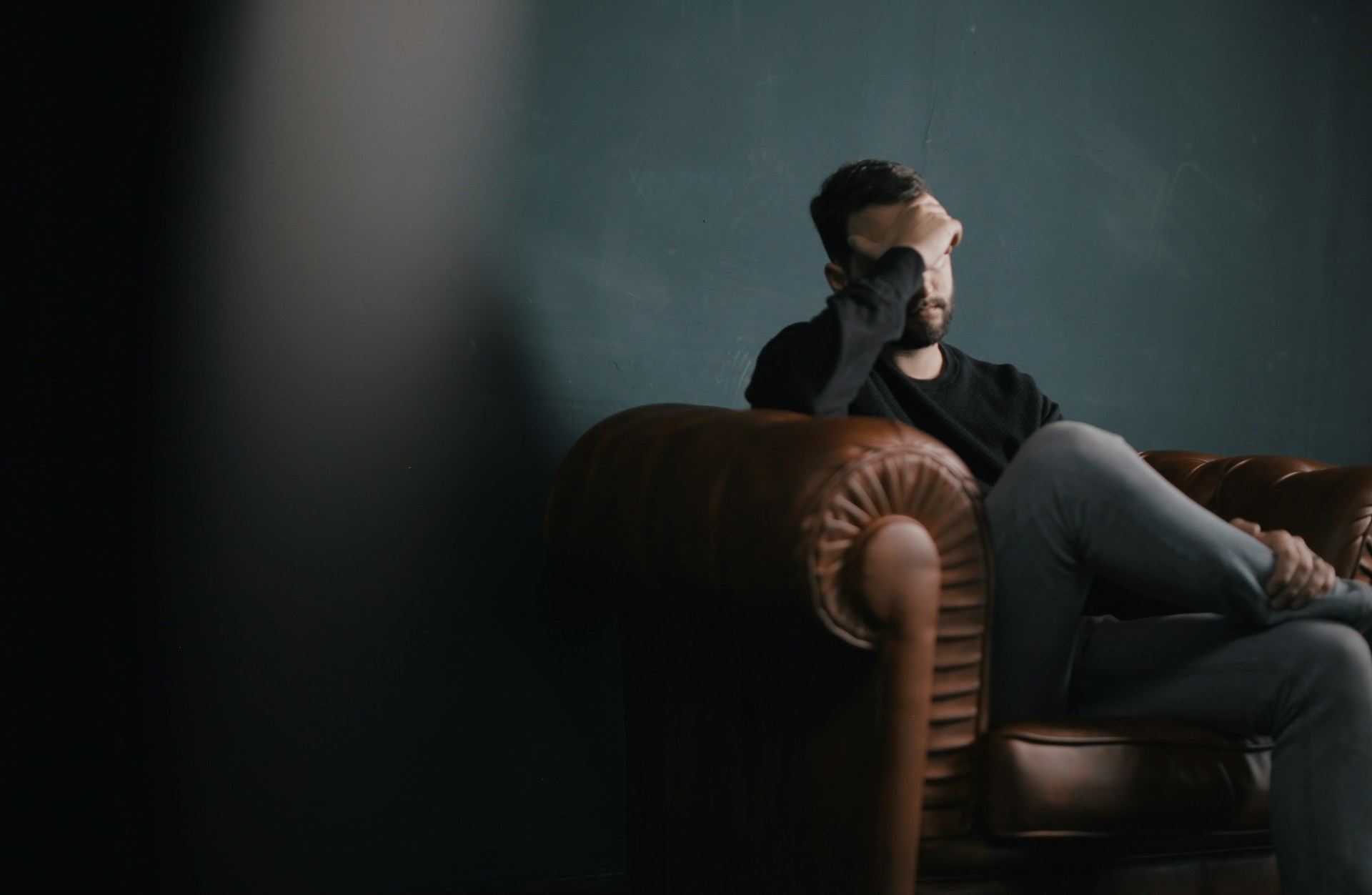
There’s a conversation that almost never happens after a Peyronie’s diagnosis. The urologist explains the condition, possibly writes a prescription, and sends you home. What they don’t ask – almost never, in my experience – is how you’re doing with it. Not physically. Emotionally.
And yet the research is unambiguous on this point. Studies show that around 81 per cent of men with Peyronie’s disease experience significant emotional distress. Around 48 per cent show symptoms consistent with depression. More than half report that the condition has negatively affected their relationship.
Those are not small numbers. That’s the majority of men who go through this carrying a psychological weight that nobody is helping them put down.
This article is about that weight. Not to make it heavier – but because naming it, understanding it, and knowing you’re not alone with it is often the first step to carrying it differently.
How common is depression and emotional distress in men with Peyronie’s disease?
Extremely common – far more than most men realise. Research published in the NIH/PMC shows that around 81 per cent of men with Peyronie’s disease experience significant emotional distress, and approximately 48 per cent show symptoms consistent with clinical depression. These are not rare or unusual reactions – they are the documented majority response to this condition.
Why does Peyronie’s disease hit so hard emotionally?
A penis makes up less than 0.1 per cent of a man’s total body weight. And yet for most men, it carries an extraordinary amount of identity, self-image, and self-worth. When Peyronie’s disease disrupts that – when erections become painful, when the curve becomes obvious, when sex becomes complicated – it doesn’t just affect a body part. It lands on that whole structure of identity.
That’s not a character flaw – it’s how most men are wired, shaped by years of culture, comparison, and an unspoken set of expectations about what it means to be a man who functions sexually.
Men describe feeling broken. Ugly. Less than. Some use the word ‘deformed.’ Some describe avoiding intimacy entirely – not because they can’t physically have sex, but because the anxiety and shame become too heavy to carry into a bedroom. Some stop initiating. Some stop being present when they do have sex, lost in their own head, monitoring, analysing, dreading.
None of that is weakness. All of it is a completely understandable response to something that strikes at the core of how many men experience themselves. The first time I went through this, I recognise every one of those patterns in myself.
Does the isolation make Peyronie’s disease worse psychologically?
Yes – significantly. Peyronie’s disease happens almost entirely in private. Men don’t talk about it with their friends. There’s no cultural script for ‘my penis has changed shape and I’m struggling with it.’ So each man goes through it largely alone, with no real sense of how common it is and no community to compare notes with.
That isolation amplifies everything. The worry feels bigger because there’s nobody to reality-check it with. The shame feels more justified because if no one else is talking about it, maybe it really is something to be ashamed of. The fear of the future has no counterweight.
The truth, which most men never hear, is that millions of men have been through this. The emotional response – including the depression, the shame, the avoidance, the anxiety about sex – is documented, studied, and recognised as a normal reaction to an abnormal situation. You are not uniquely broken. You are having a human response to something genuinely difficult.
How does Peyronie’s disease affect relationships and partners?
Peyronie’s disease doesn’t happen in isolation. For men who have partners, it happens inside a relationship – and that relationship feels every bit of it, even when nothing is said. Partners notice the change. They notice when a man withdraws from physical intimacy, when something that used to be easy becomes fraught.
The result, in many cases, is two people sitting with the same weight on opposite sides of a wall of silence. The man is protecting his partner from his shame. The partner is protecting the man from their concern. And the distance grows.
Research bears this out. Studies on the female partners of men with Peyronie’s disease – documented in the Journal of Sexual Medicine – find that partners also experience reduced sexual satisfaction, increased anxiety, and relationship strain. The condition doesn’t just affect the man – it affects the couple. And it tends to do more damage when it’s not talked about than when it is.
I know how hard that conversation feels to start. But in my experience – both times I went through this – partners respond to honesty with far more understanding than men expect. What they struggle with is not the condition itself. It’s being kept outside it.
What is the connection between Peyronie’s disease and male identity?
For many men, sexual capability is woven into their sense of competence, worth, and masculinity in ways they may never have had to examine before. It’s often not conscious. It’s just there – an assumption that being a functioning sexual partner is part of being a man, and that anything that compromises that compromises something fundamental.
When that assumption gets tested – when erections become unreliable, when sex becomes painful or complicated, when the shape of the penis changes in ways that feel wrong – the psychological impact goes deeper than the physical symptom. It touches the question of who you are. Whether you’re still the same person. Whether you’re still enough.
Those are heavy thoughts. And they’re made heavier by the fact that most men have no practice sitting with them, no language for them, and no one to talk to about them.
What I want to say to that is this: the question of who you are is not answered by the shape of your erection. I know that can sound easy to say and hard to feel. But the men who come through Peyronie’s disease in the best shape – emotionally, not just physically – are often the ones who used it, somewhere along the way, as an occasion to examine those assumptions. Not to abandon their sexuality, but to find a slightly looser relationship with it.
Can anxiety from Peyronie’s disease cause additional erectile problems?
Yes, and this is a cycle worth understanding. Anxiety has direct physiological effects on sexual function. Stress hormones constrict blood vessels. A nervous system in a state of alert is not a nervous system that supports erection. The very anxiety that Peyronie’s disease creates can itself generate erectile difficulties – on top of whatever the physical condition produces.
A man worries about his erection. The worry makes it harder to get or maintain an erection. That confirms the worry. Which makes the next attempt harder. And so on.
Understanding this cycle doesn’t immediately break it. But it helps to know that some of what you’re experiencing may be anxiety-driven rather than purely physical. It means that addressing the mental health piece isn’t separate from addressing the sexual function – it’s part of the same thing.
Relaxation, presence, reducing performance pressure, and where necessary professional support – these aren’t soft alternatives to medical treatment. They’re part of managing the condition well. I wish I’d understood that the first time I went through this rather than treating the psychological and physical as two separate problems.
What kind of support actually helps with Peyronie’s disease and mental health?
It varies by person, and the honest answer is that any step away from isolation tends to help. For some men, simply reading about the psychological impact of Peyronie’s disease – and recognising their own experience in the research – is enough to take some of the shame out of it. Knowing that depression and distress at this level are documented, normal reactions to a real condition changes something in how you hold it.
For others, talking to a partner helps more than anything else. Getting out of the isolation that the silence creates. Letting someone who cares about you know what’s actually going on.
For some men, professional support is the right step – a therapist who understands sexual health, or a general counsellor who can help process the identity questions and the anxiety. The Cleveland Clinic explicitly recommends psychological support as part of comprehensive Peyronie’s management. There’s no shame in that. There’s only the question of whether you want to carry this alone or not.
Most men with Peyronie’s disease never speak to a therapist about it. That’s understandable – it takes a certain willingness to seek that kind of help, especially for something this private. But I’d encourage it. In my case, processing the psychological side rather than pushing through it made the physical recovery clearer too.
You are more than this
The men I’ve known who’ve been through Peyronie’s disease – and the version of myself who went through it twice – all went through periods of thinking that this condition defined them. That it was the most important thing about them. That it determined their future.
It doesn’t. It’s a condition of connective tissue in one part of the body. It’s significant, and I’m not going to pretend it isn’t. But it’s not who you are. It’s not what your relationships are built on. It’s not the measure of you as a partner, as a person, as a man.
A penis makes up less than 0.1 per cent of a man’s body weight. The part of you that loves, connects, thinks, shows up for other people, finds meaning – that’s the rest of it. That part is entirely intact.
The goal of managing Peyronie’s disease well isn’t to get back to some previous version of yourself that you’ve lost. It’s to come through it with a body that functions, a mind that’s clear, and the understanding that you handled something hard. That’s not nothing. That’s actually quite a lot.
And you don’t have to do it alone.
Frequently Asked Questions
Is depression a normal reaction to Peyronie’s disease?
Yes. Research published in NIH/PMC documents that roughly 48 per cent of men with Peyronie’s disease show symptoms consistent with clinical depression. This is a recognised, studied response to a condition that affects body image, sexual function, and identity. It is not weakness – it is a documented reaction to something genuinely difficult.
Should I tell my partner about Peyronie’s disease and how it’s affecting me mentally?
In most cases, yes. The research consistently shows that men underestimate how well partners respond to honesty about this condition. Partners are often already aware something has changed. The silence tends to create more distance and anxiety than the conversation does. Starting the conversation – even imperfectly – is usually better than continuing to carry it alone.
Can the anxiety from Peyronie’s disease cause erectile dysfunction?
Yes. Performance anxiety triggers stress hormones that restrict blood flow, making erections harder to achieve or maintain. This creates a feedback loop: difficulty performing reinforces anxiety, which creates more difficulty. Some erectile problems experienced during Peyronie’s disease are anxiety-driven rather than purely structural. Addressing the anxiety directly – through relaxation, reduced pressure, and sometimes professional support – is a legitimate part of managing the condition.
When should someone with Peyronie’s disease seek professional psychological help?
If you are experiencing persistent low mood, withdrawal from intimacy, avoidance of relationships, or significant anxiety about sexual performance, professional support is appropriate. A therapist with experience in sexual health or men’s health can be particularly helpful. The Cleveland Clinic includes psychological support as part of recommended comprehensive care for Peyronie’s disease.
Does the mental health impact of Peyronie’s disease get better over time?
For most men, yes – particularly when they have accurate information, some form of support, and a clear plan for managing the physical condition. The acute distress tends to peak in the early active phase when uncertainty is highest. As men understand what they’re dealing with, what to expect, and what they can actively do, the psychological burden typically eases. Managing the condition proactively rather than waiting passively tends to support mental health as well as physical recovery.
Sources
NIH/PMC: Psychological Impact of Peyronie’s Disease | Journal of Sexual Medicine | Cleveland Clinic: Peyronie’s Disease | NIDDK: Penile Curvature