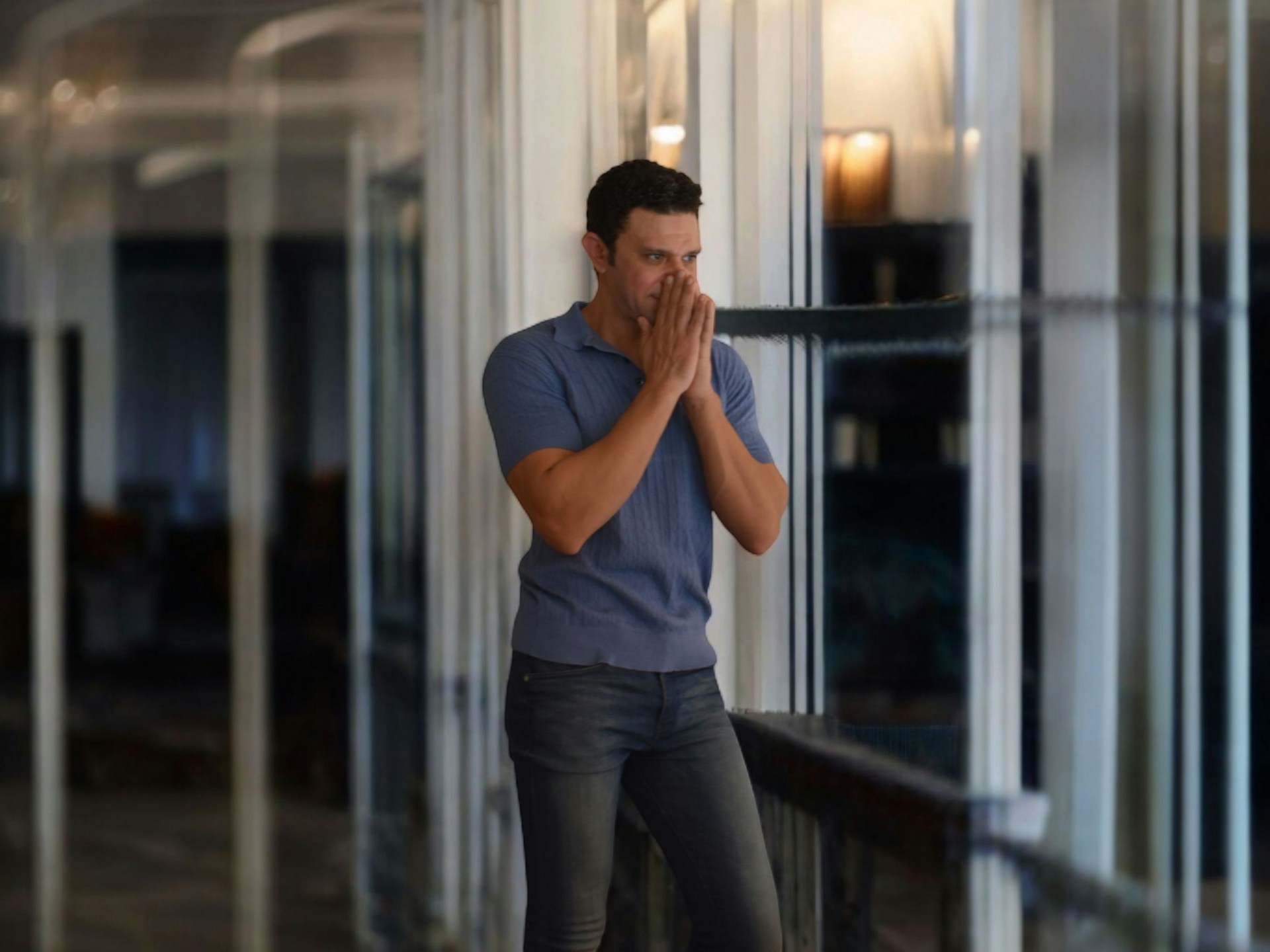
That fear sits in the back of every man’s mind after a diagnosis. You’ve noticed the curve, or the pain, or the lump – and now you’re wondering whether this is just the beginning. Whether things are going to keep getting worse, week by week, until you end up somewhere you don’t want to be.
I had that fear too. Both times I went through this.
So let’s deal with it directly – with the actual numbers, and with what the research says drives progression versus what stops it.
Does Peyronie’s disease get worse over time?
For around 40 per cent of men, Peyronie’s disease does worsen without intervention. Around 40 per cent find it stays roughly stable, and 20 per cent see spontaneous improvement. So worsening is a real risk – but it is not inevitable, and it is not entirely out of your control. What happens during the active phase, and how you manage it, has a genuine influence on where the condition ends up.
That fear is reasonable. But it’s not your fate.
What causes Peyronie’s disease to progress and get worse?
Peyronie’s disease worsens when the active phase – the period when scar tissue is still forming – is prolonged or aggravated. The main drivers of progression are: continuing to have painful sex during the active phase (which adds micro-trauma to already-inflamed tissue), underlying health conditions such as diabetes and cardiovascular disease that impair the body’s ability to resolve inflammation, smoking, poor circulation, and using the wrong treatments at the wrong time.
The most common way men make things worse without realising it is by continuing to have sex through significant pain during the active phase. Pain during erection is the body’s signal that the tissue is under stress. Ignoring that signal repeatedly – especially with vigorous or poorly-angled sex – can extend the active phase and produce more scar tissue than would have formed otherwise.
I did this the first time. I kept going because I didn’t know any better. There was no dramatic moment of damage – just a slow accumulation of stress on tissue that was already struggling to heal. I paid for it in the shape of a longer active phase and more curvature than I probably needed to end up with.
Timing mistakes compound this. Using mechanical traction during the active phase, for example, can accelerate damage rather than reverse it. Doing nothing and waiting passively can let the scar tissue set further than it needed to.
Does Peyronie’s disease ever stop getting worse?
Yes. The active phase always ends. Peyronie’s disease is not a condition that progresses indefinitely – at some point, usually within six to twelve months of onset, the inflammatory process settles, the scar tissue finishes forming, and the condition enters the stable phase. Once there, it is no longer actively getting worse. What you have at that point is more or less what you will have going forward unless steps are taken to address it.
That’s not a cheering thought if things have progressed significantly. But it is an end point. It stops. The question is how much it has progressed before it stops – and that is genuinely something you can influence.
What can you do to prevent Peyronie’s disease from getting worse?
The most effective things you can do are: avoid painful sex during the active phase, reduce systemic inflammation through diet and lifestyle, address known risk factors such as smoking and blood pressure, and ensure you are not using any treatments that are inappropriate for the active phase. Protecting the tissue during the active phase limits how far the condition progresses before it stabilises. Men who manage the active phase well tend to arrive at the stable phase with less curvature and deformity than those who did not.
Lifestyle matters more than most urologists acknowledge. Anti-inflammatory nutrition, adequate sleep, not smoking, managing blood pressure – none of these are dramatic interventions. But the body’s ability to control and resolve an inflammatory process is directly affected by its general condition. You are not powerless here.
The second time I went through this, I understood what was driving progression and what could slow it. I made different choices about sex during the active phase, I paid attention to things I’d ignored the first time, and I was more careful about what I was putting my body through. The condition still ran its course – but it ran a shorter course, and it settled in a better place.
Is worsening of Peyronie’s disease inevitable?
No. The 40 per cent figure for worsening is an average across all men with Peyronie’s disease – those who managed it well and those who did not, those in good general health and those who were not, those who understood the phases and those who were never told. You are not a statistic. Knowledge applied at the right time genuinely changes outcomes. The men who tend to do best are not those with the mildest cases – they are those who understood what was happening and responded accordingly.
That’s what this is all about.
–
Frequently Asked Questions
How quickly can Peyronie’s disease worsen?
The speed of progression varies considerably. Some men find the condition develops relatively slowly over six to twelve months. Others notice more rapid change over weeks. Rapid early progression does not necessarily predict a worse final outcome – but it is a signal that the active phase is well underway and that avoiding aggravating factors is particularly important. If the curve or shape seems to be changing week to week, you are likely in an active, progressing phase.
Does having sex make Peyronie’s disease worse?
Painful sex during the active phase does carry a real risk of making things worse. The pain indicates that inflamed tissue is being stretched under mechanical stress – and repeated micro-trauma to already-damaged tissue can feed the scar tissue formation process. Sex that is pain-free or only mildly uncomfortable is less likely to cause harm. The key distinction is not whether to have sex at all, but whether the activity is adding significant stress to inflamed tissue.
Do health conditions like diabetes make Peyronie’s disease worse?
Yes, there is a consistent association between metabolic and cardiovascular conditions – diabetes, hypertension, high cholesterol – and worse outcomes in Peyronie’s disease. These conditions impair the body’s ability to regulate inflammation and repair tissue cleanly, which is central to how Peyronie’s progresses. Men with these conditions are not condemned to worse outcomes, but managing them well is an additional reason to take them seriously during the active phase.
Once Peyronie’s disease stabilises, can it start getting worse again?
In most cases, the stable phase is genuinely stable – the condition does not restart without a new trigger. However, significant new trauma to the penile tissue can theoretically restart an inflammatory process. This is one reason why the guidance to protect the tissue applies beyond just the acute active phase. Men who have had Peyronie’s once are also at higher risk of a second episode, which may behave differently from the first.
Sources
American Urological Association – Peyronie’s Disease Guideline – Data on natural history and rates of progression.
Cleveland Clinic – Peyronie’s Disease – Risk factors for progression and treatment overview.
NIDDK – Penile Curvature (Peyronie’s Disease) – Overview of active phase, progression and stabilisation.
Journal of Sexual Medicine – Predictors of Peyronie’s disease progression – Research on factors associated with worsening versus stabilisation.