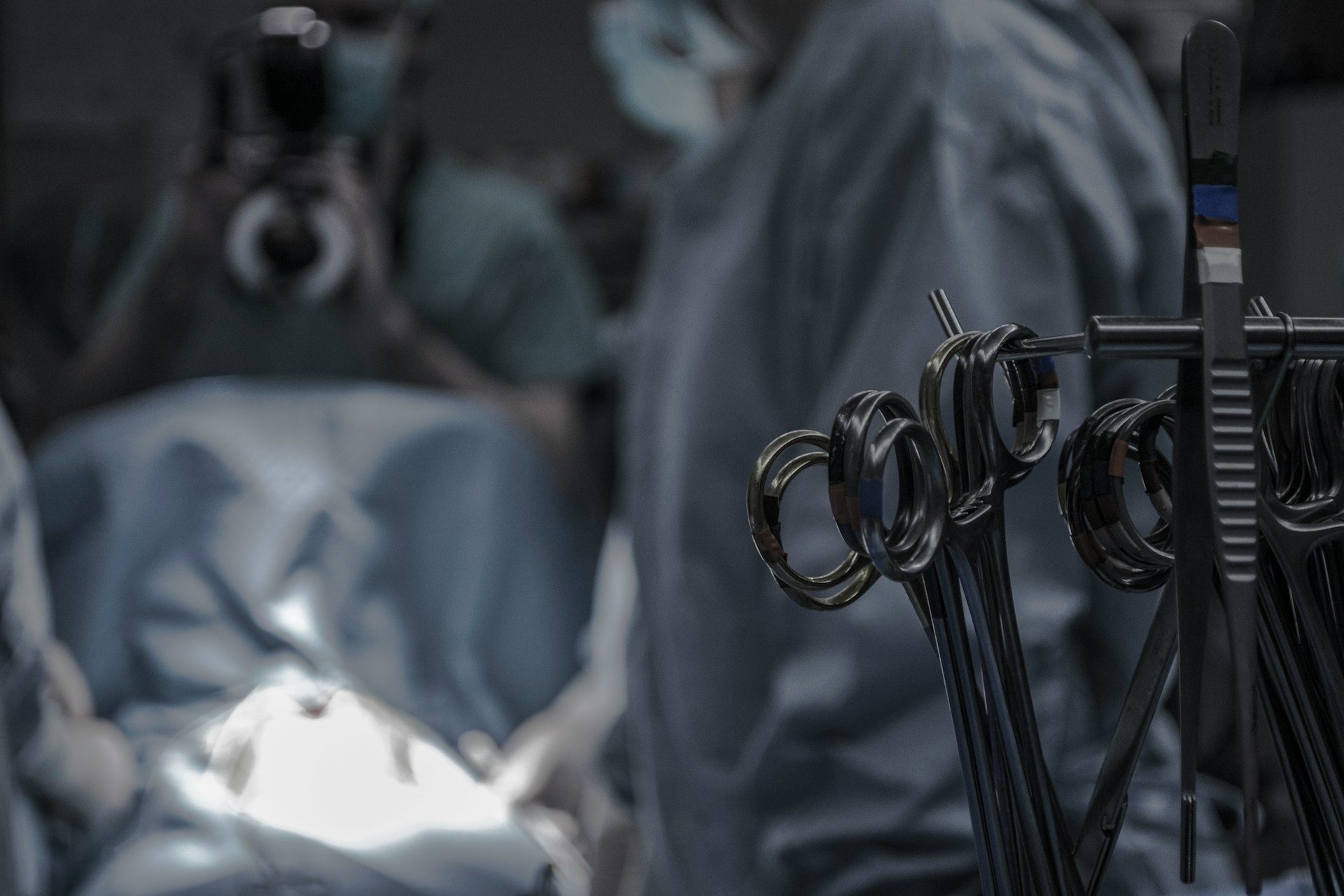
Surgery is the word that hangs over a Peyronie’s diagnosis for a lot of men. Some arrive at their first urology appointment already convinced they’ll need it. Others spend months trying to avoid even thinking about it. Most end up somewhere in between – not sure when it becomes the right choice, not sure what it actually involves, and not sure whether the fear they feel about it is proportionate to the reality.
Surgery for Peyronie’s disease is a real option, and for some men it’s the right one. But it’s not the automatic endpoint, and it’s not something to walk into without understanding what you’re actually deciding. The numbers matter. The timing matters. And the question of whether your penis needs to be straightened, or just needs to work, is more important than most men realise.
Does Peyronie’s disease always require surgery?
No – the majority of men with Peyronie’s disease do not require surgery. Surgery is reserved for cases where significant curvature prevents intercourse, causes ongoing pain for either partner despite conservative management, or where erectile dysfunction doesn’t respond to medication. The goal of treatment is a penis that works and allows sex without significant difficulty – not a perfectly straight one.
The AUA Guidelines recommend exhausting non-surgical options before considering surgery, and only once the condition has been stable for at least six months. If the curve – whatever degree it sits at – doesn’t prevent sex and doesn’t cause ongoing pain after the passive phase rehabilitation, surgery may not be necessary at all.
I talked with my partner about surgery at a point when my curve was at its most severe. Their response surprised me. They didn’t want me to operate – because the angle was reaching places it hadn’t reached before. That’s not the right answer for every couple, and I’m not suggesting a curve is always an improvement. But it reframed the question for me. The question is not ‘is it straight?’ It’s ‘does it work, and is this liveable?’
When does surgery for Peyronie’s disease become the right option?
There are clear situations where surgery moves from ‘option’ to ‘worth discussing seriously.’
The first is significant curvature that makes intercourse mechanically impossible or causes genuine pain for either partner, even after the condition has stabilised and conservative management has been given a proper chance. If you’ve been through the passive phase, used traction consistently, addressed everything you can address, and sex is still not workable – surgery is appropriate to explore.
The second is erectile dysfunction that doesn’t respond to medication. When the plaque has affected the mechanics of erection significantly enough that tadalafil or similar drugs don’t produce a reliable result, an implant – which addresses both curvature and erectile dysfunction simultaneously – may be the most practical solution.
The third is severe psychological impact. If the condition, even when physically manageable, is causing depression or relationship breakdown that isn’t improving – that’s a legitimate factor in the decision. Surgery is not just about the physical angle of the curve. It’s about quality of life.
When is the right time to have Peyronie’s surgery – and why does timing matter?
Surgery is only appropriate in the passive phase, once the condition has been stable for at least six months. The Cleveland Clinic and the AUA Guidelines both specify this minimum stability requirement. Operating during the active phase – or before things have fully settled – risks operating on tissue that’s still changing.
The curve you straighten today may not be the curve you’d have had in three months. The scar tissue may not have finished forming. Surgery on unstable tissue significantly increases the risk of recurrence and complications.
Six months of stability is the minimum. Many surgeons prefer twelve. If a doctor is suggesting surgery before that window has passed, it’s worth asking why, and worth getting a second opinion.
What are the different types of Peyronie’s surgery and what are the risks?
Understanding what the procedures actually involve changes how you think about the decision. There are three main surgical approaches, each with different trade-offs.
Plication is the most common approach. The surgeon shortens the side of the penis opposite the plaque – essentially pulling the straighter side back to balance with the curved side. It’s the least invasive option, has the lowest complication rate, and generally produces reliable straightening. The trade-off is loss of penile length – typically between half a centimetre and a centimetre, sometimes more. The risk of developing erectile dysfunction as a result sits at around 13 per cent.
Grafting involves removing some of the plaque and replacing it with tissue – either the patient’s own tissue from elsewhere or a biological material. It can preserve more length than plication and works better for more severe or complex curvature. The complication rate is higher, and the risk of erectile dysfunction following the procedure is significantly elevated – studies put it at up to 50 per cent. That’s a number worth sitting with. You may end up with a straighter penis that doesn’t reliably get erect.
Penile implants are used for men who have both significant curvature and erectile dysfunction that medication can’t address. The implant provides rigidity mechanically, and in many cases straightens the curve adequately on its own. It’s the most involved of the three options and is generally reserved for men whose erectile function has already been significantly compromised.
Across all three approaches, research published in the Journal of Sexual Medicine shows that up to 29 per cent of men require a further procedure at some point because the curvature returns. Surgery is effective for most men – but it isn’t always permanent.
What does recovery from Peyronie’s surgery actually look like?
Recovery is not trivial. Most men are looking at six to eight weeks before sexual activity is possible again. There’s swelling, bruising, and often a period where erections themselves are uncomfortable as the tissue heals.
The shape of the penis after surgery is often different from both what it was before Peyronie’s and what it looked like with the curve. There can be changes in sensation. There’s usually some loss of length with plication. It takes time – months, sometimes longer – before the final result is clear.
That’s not a reason not to do it, if surgery is the right choice. But it’s worth going in with clear eyes rather than the expectation that you’ll wake up from the procedure and everything will be back to normal.
The men who tend to do best after surgery are the ones who went in having already done everything else first – who arrived at the decision because conservative management genuinely wasn’t enough, not because they panicked early and skipped the rehabilitation phase.
Do you need to decide about surgery now?
If you’re reading this in the middle of the active phase, or somewhere in the early passive phase, surgery is not a decision you need to make right now. The condition needs time to stabilise before surgery is even on the table. And the rehabilitation process – done properly – changes what the residual curve actually looks like and what you’re dealing with by the time you’re in a position to decide.
Give the process a chance to run. Not with passive hope, but with the right information and the right approach at each stage. Surgery will still be there if you need it. The window doesn’t close.
What changes when you manage the active and passive phases well is the decision you’re making. You arrive at it with less curvature, better function, and a much clearer sense of whether surgery is genuinely necessary – or whether you’ve already found your way through without it.
Frequently Asked Questions
What percentage of men with Peyronie’s disease need surgery?
The majority of men with Peyronie’s disease do not require surgery. Estimates vary, but surgical intervention is generally considered for men with severe curvature (typically greater than 60-90 degrees), curvature that prevents intercourse, or erectile dysfunction unresponsive to medication. The NIDDK and Cleveland Clinic both position surgery as a last resort after non-surgical management has been appropriately attempted.
How long do you have to wait before Peyronie’s surgery?
The AUA Guidelines recommend waiting until the disease has been stable for at least 6 months before considering surgery – meaning no new pain, no change in curvature, and no change in plaque. Many surgeons prefer 12 months of stability. This waiting period ensures the scar tissue has fully matured, reduces recurrence risk, and gives non-surgical approaches a proper opportunity to work.
What is the success rate of Peyronie’s surgery?
Success rates depend on the procedure and how ‘success’ is defined. Plication achieves reliable straightening for most men but carries a 13 per cent risk of erectile dysfunction and typically reduces penile length. Grafting can preserve more length but has a risk of erectile dysfunction up to 50 per cent. Up to 29 per cent of men across procedures need a further operation due to recurrence. Research in the Journal of Sexual Medicine documents these outcomes in detail. Surgery is effective for most men – but the trade-offs are real.
Is plication or grafting better for Peyronie’s disease?
It depends on the severity and location of the curvature, penile length, and erectile function. Plication is preferred for moderate curvature where some length loss is acceptable – it has lower complication rates. Grafting is considered when the curvature is more severe or complex and preserving length is a priority – but the significantly higher risk of erectile dysfunction makes it a more consequential choice. The right answer varies by individual and should be discussed with a urologist experienced in Peyronie’s surgery.
Can Peyronie’s disease come back after surgery?
Yes – recurrence is documented in up to 29 per cent of men across surgical approaches. This is one of the key reasons surgery is positioned as a last resort rather than an early intervention. Recurrence risk is one factor in the decision alongside complication rates and trade-offs specific to each procedure. Men who have surgery after thorough non-surgical management typically have more realistic expectations about outcomes and are better positioned to make an informed choice about the trade-offs involved.
Sources
AUA Guidelines: Peyronie’s Disease | Cleveland Clinic: Peyronie’s Disease | NIDDK: Penile Curvature | Journal of Sexual Medicine